

 LinkedIn
A buyer asks ChatGPT for three vendors in your category. If you are missing from the answer, the diagnosis looks a lot like paid search: prompts are keywords, citations are a kind of impression share, and content gaps are the search terms you never served.
How do I get my business cited as a source in ChatGPT and Perplexity answers?
First, your page has to be available as evidence for the question being asked. An answer engine does not read the entire internet before responding. When it retrieves current sources, it selects material relevant to the prompt and uses that material to assemble an answer. If your page is absent from the candidate set, elegant brand copy will not save it.
I would not assume a Google page-one ranking guarantees a citation, either. An analysis tracking 15,000 long-tail prompts found that only 12% of cited URLs ranked in Google’s organic top 10 across the AI assistants it examined. Perplexity was closer to traditional search than ChatGPT in that analysis. The practical point is simpler than the percentages: check whether the engines can access your useful pages, then check whether those pages answer the buyer’s actual question. Do not treat one ranking report as proof you are covered everywhere.
Think about landing-page relevance in Google Ads. If an ad promises enterprise pricing and the landing page hides every number behind a booking form, the page fails the intent you paid to capture. The AI-search version is a comparison question that your site answers with 800 words of positioning and no comparison. An analysis of 2,150 AI-cited URLs found that comparison prompts cited structured /alternatives, /vs and /compare pages 34% to 43% of the time, versus under 3% for generic listicles. That is not a promise that a table earns a citation. It is a good reason to stop making buyers hunt for the facts.
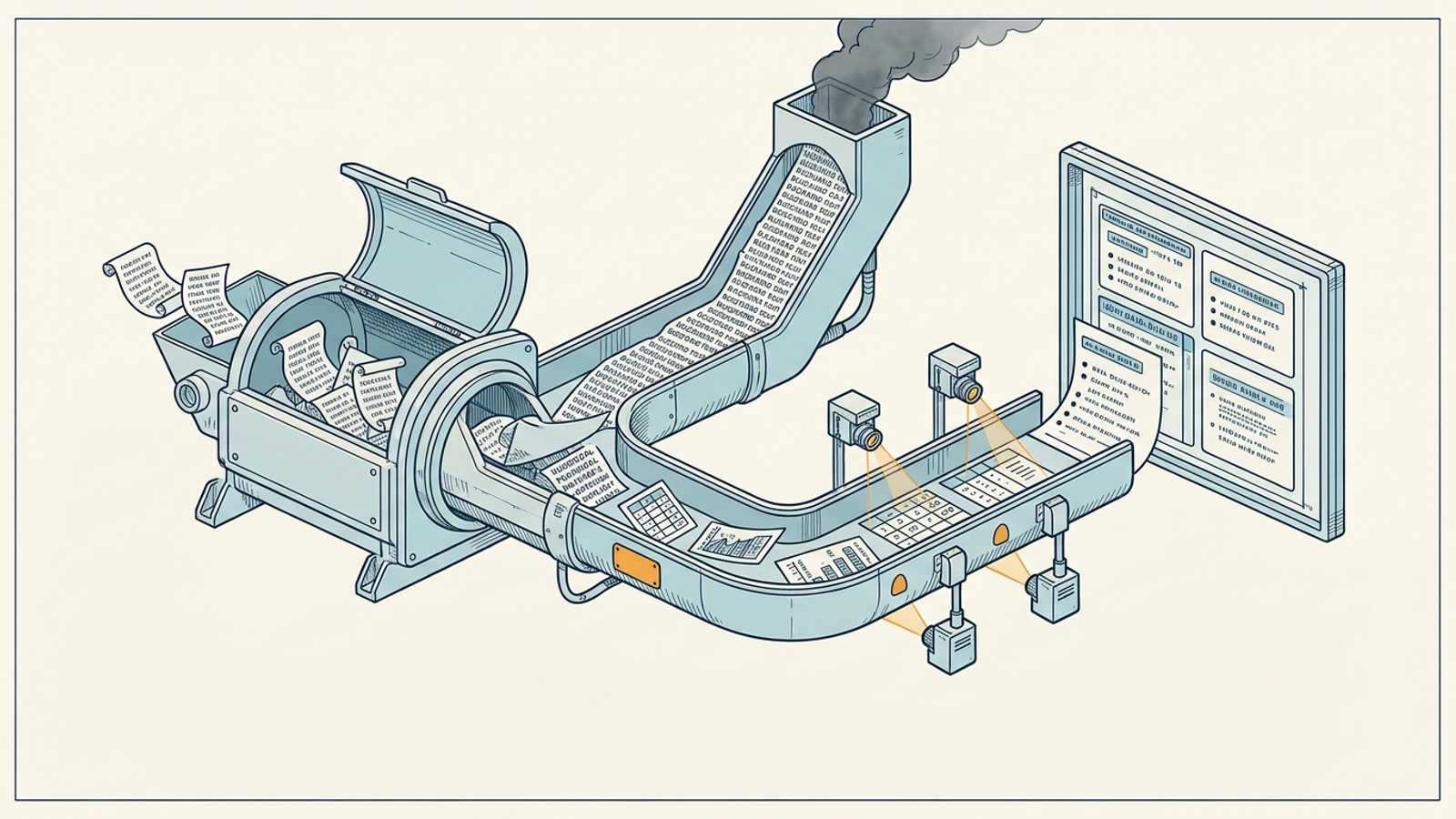
Publish direct, factual comparison and specification pages. Put pricing brackets, system requirements, feature limits and relevant differences in clean HTML tables when you can state them accurately. If a buyer asks whether your product fits a particular company size, a clear threshold does more work than a paragraph about your commitment to innovation. Make the answer easy to find and easy to extract.
How can my business measure brand visibility across ChatGPT, Gemini and Google AI Overviews?
Borrow the idea of Search Impression Share, not the comfort of a fixed rank. In paid search, I care how often an eligible ad appears, not whether a screenshot shows it in position one on Tuesday. AI answers also change across prompts and runs. One response is an observation, not a visibility score.
Build clusters of prompts that reflect how buyers evaluate you, run them repeatedly across the engines you care about, and record three separate outcomes:
- Absent: Your brand does not appear.
- Mentioned: Your brand appears in the prose without a clickable source.
- Cited: The answer links to your page as a source.
That distinction matters more than a dashboard’s single tidy percentage. Some tools make AI visibility reports look more certain than they are by compressing changing answers into one number. Keep the underlying prompts and responses where you can inspect them.
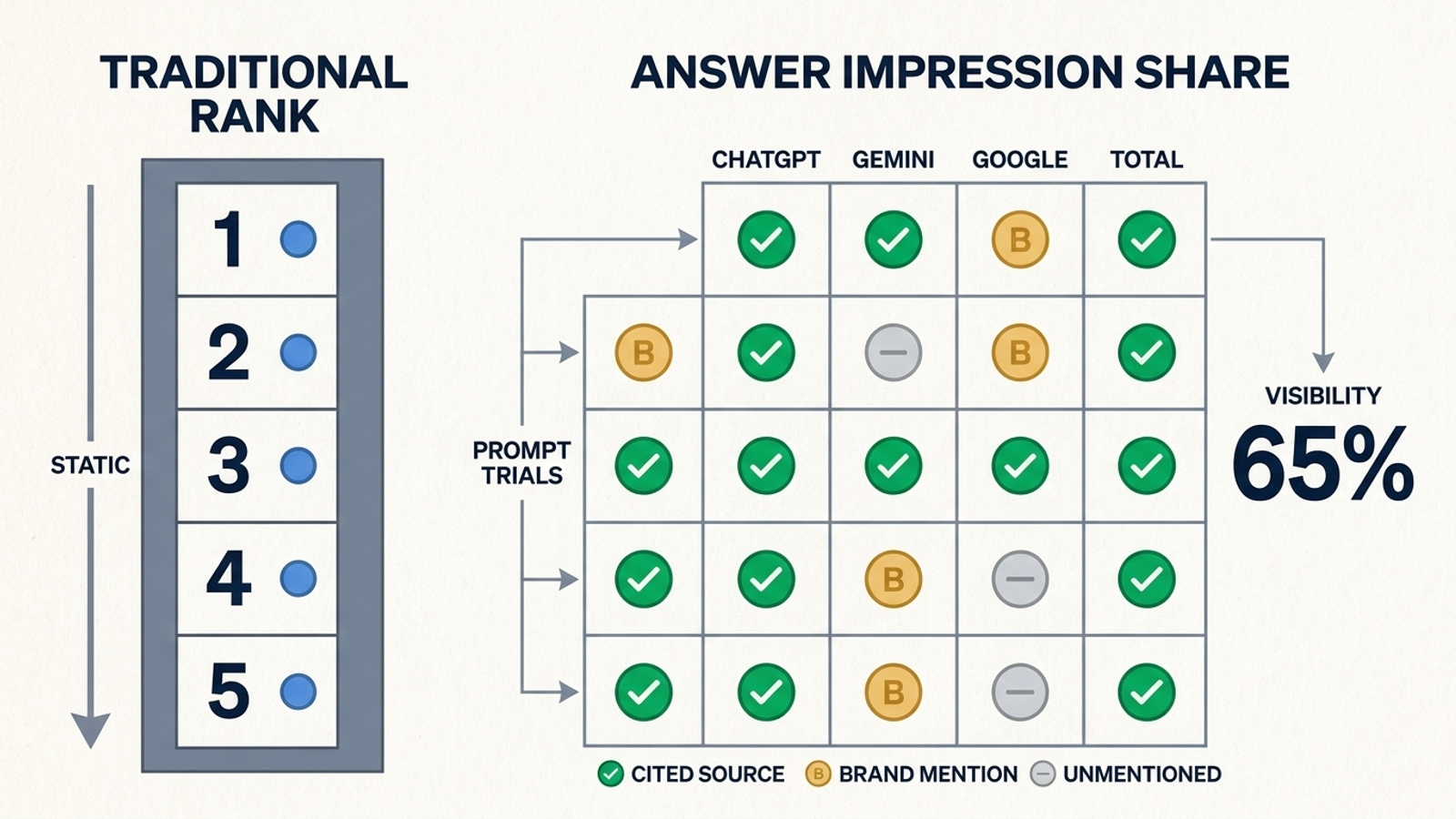
Then diagnose the pattern. In Google Ads, impression share lost to budget calls for a different fix from impression share lost to rank. Here, repeated mentions without links call for a different investigation from total absence. Look at which pages the engine cites, whether your corresponding page is accessible, and whether it states the relevant facts plainly. I call the first pattern an extraction problem: the brand appears, but its own page is not being used as evidence. Do not buy more awareness before you know which problem you have.
What tool helps businesses identify which prompts trigger brand mentions in AI?
A monitoring tool can run prompts on a schedule and record whether your brand appears. Otterly.AI lists a $29-a-month entry tier for 15 prompts; the draft market also includes SiteSignal, Peec AI, Profound and Semrush at different price points. Profound’s pricing has shifted toward enterprise quotes. Check current limits before you buy. More important, decide what you want the tool to ask.
Buying a dashboard before building a prompt list is like opening a Google Ads account on broad match and letting the billing run without a keyword strategy. I would sort prompts by commercial distance from cash. A branded prompt such as “What is [Your Company]?” mostly tests whether the assistant recognizes a name the buyer already knows. Unbranded questions reveal whether you enter a new buyer’s evaluation at all:
- “What is the best dispatch software for a 12-truck plumbing company?”
- “Which B2B billing platforms support usage-based pricing natively?”
- “How does [Your Company] compare with [Alternative] for [specific requirement]?”
Start with at least forty unbranded, high-intent prompts that reflect the operational trade-offs your buyers actually weigh. Group similar questions so a change in phrasing does not masquerade as a strategic discovery. Otherwise, the software may tell you precisely how often an assistant remembers your company name while missing the market you are trying to enter.
Then borrow another paid-search habit: negative-keyword mining. A search terms report shows where an account spent money on the wrong intent. Negative prompt auditing shows where an AI answer gets your business wrong. Suppose an assistant says you lack an integration released twelve months ago, or quotes pricing tiers you retired during your seed round. A mention count would mark that as visibility. A buyer might mark it as a reason to leave.
Open the answers. Inspect what the assistant says, look for the source of stale information, and correct the pages you control. A mention is not a win if it disqualifies you before sales gets a call.
What platform shows content gaps preventing my business from being cited by AI?
Profound, Peec AI and Otterly can help you compare your appearances with pages cited for tracked prompts. Read that output like a search terms report, not an order form for six new thought-leadership articles.
In paid search, the search terms report is where assumptions go to die. You thought you bought “commercial fleet insurance”; the report shows you paid $42 a click for “toyota fleet recalls 2018” because broad match found a connection. In AI visibility, a useful gap report shows the questions where a competing page supplied an answer and yours did not. The gap may be a missing fact, not a missing topic.
Say a buyer asks for “SOC 2 compliant document signing tools with HIPAA BAA under $50/user.” That question contains several conditions. If your pricing page says “Contact Sales for a Custom Security Assessment,” it gives the engine less to work with than a page that explicitly states the relevant plan, price and support for those requirements. Do not copy a competitor’s page or assume its claims are right. Check your own product facts, publish what you can substantiate, and make the conditions easy to locate.
That is a much smaller job than commissioning 2,000 words on the future of document signing. It is also a more useful one.
Can I just pay for AI Overview ads instead?
You can advertise around AI Overviews, but you cannot simply buy an organic citation inside one. Google’s documentation says advertisers cannot specifically target AI Overviews or opt out of them independently. Availability differs by placement and market, and dedicated AI Overview placement reporting is not available in the way an operator would want for a clean test. That makes “we’ll just bid for the answer” a poor plan.
The click environment changes, too. A 15-month Seer Interactive study covering 3,119 queries and more than 26 million impressions found that paid click-through rates fell 68%, from 19.70% to 6.34% on results pages with an AI Overview. Organic CTR fell 61%. In that analysis, being cited in the Overview was also associated with 91% more paid clicks and 35% more organic clicks than being absent from its citations. Those figures describe what the study observed; they do not mean adding a citation will automatically produce those lifts in your account.
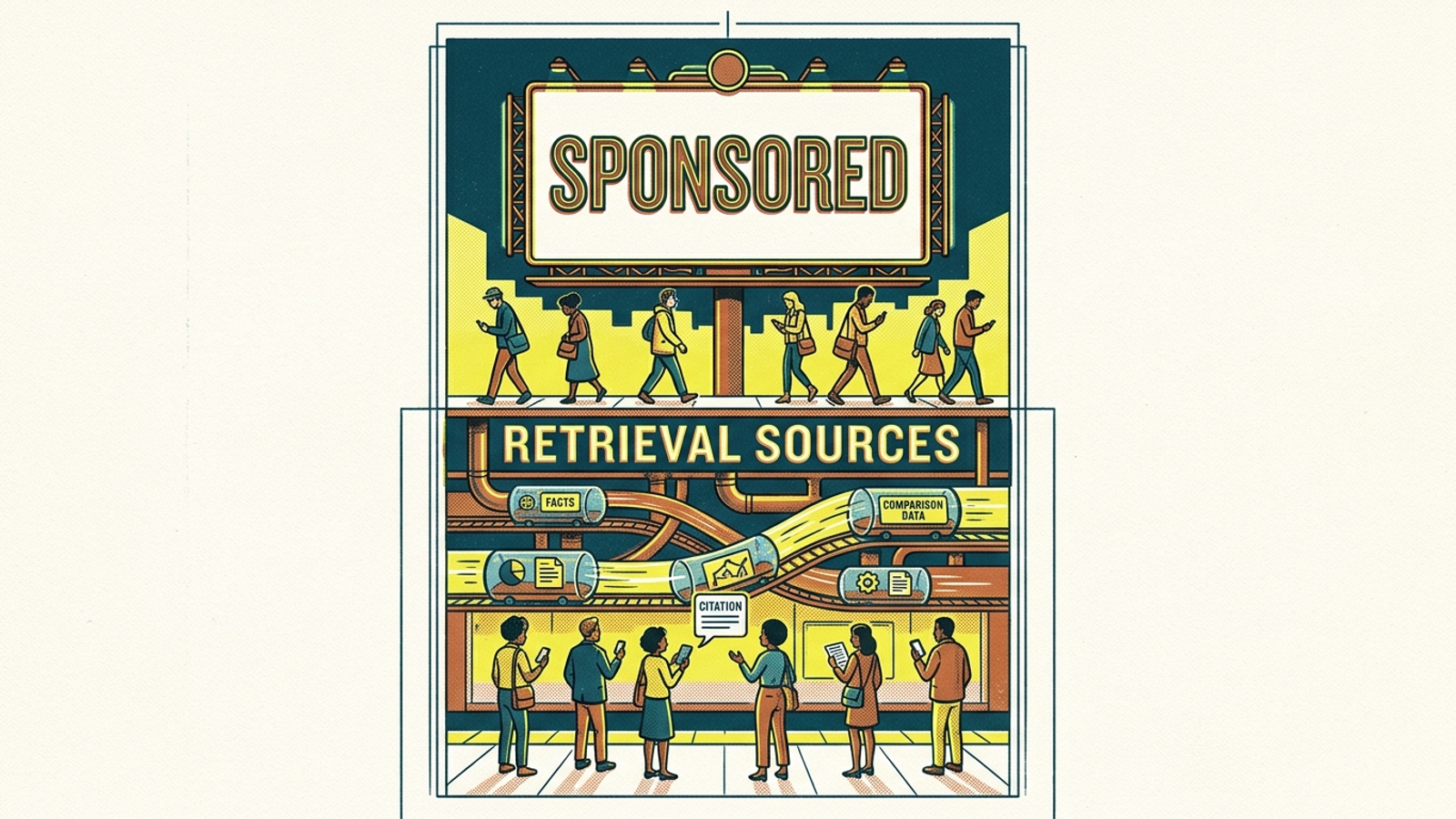
The operating lesson still holds. An ad and a cited source do different jobs. The ad buys a chance to appear in a paid placement; the citation makes your page part of the answer the buyer is reading. If you run paid search, keep managing it. Just do not use it as an excuse to leave the underlying answer gap untouched.
Do I need a tool, or someone to do the work?
You may need a tool to collect repeated answers. You need someone accountable for acting on what the answers reveal. A monitoring subscription can show that a competitor was cited last Tuesday. It cannot, by itself, decide which comparison page needs work, check whether a feature claim is current, rewrite the page and judge whether the next set of answers improved. A report is a starting gun, not a finish line.
This is the handoff I dislike in the traditional model: one vendor measures the problem, another writes the content, and someone else manages paid search as though buyers keep those experiences separate. At groas, we take a different approach. Specialized AI models work continuously across paid and organic search, while a named human strategist sets direction and guardrails and remains accountable for the outcome. The point is not to replace judgment with another dashboard. It is to shorten the distance between finding a gap, making a change and checking whether that change helped qualified pipeline.
If you are evaluating any provider, including us, ask to see that loop. What did it observe? What did it change? Who approved the boundaries? What happened after? Do not pay a retainer just to receive a more attractive description of losing.
What is the cost of staying unextracted?
This is the question I wish business owners asked. If an enterprise VP or a local homeowner asks an assistant for a recommendation and your useful page never enters the answer, you may lose more than a click. You may miss the shortlist before a buyer reaches your site and before your tracking script has anything to record.
I would not spend that moment interrogating model architecture for its own sake. I would take the paid-search approach: identify the commercially important prompts, inspect the answers, find where your facts are absent or wrong, and fix the pages that should supply them. Keep paid bidding under commercial guardrails, too. An ad can still do its job; it just cannot do the citation’s job for it.
The prompt is a query. The citation is a share of the answer. The gap report tells you which questions you failed to serve. Stop treating those as mysterious new categories of marketing work and start asking the question that matters: when a buyer needs evidence to choose, is yours there?